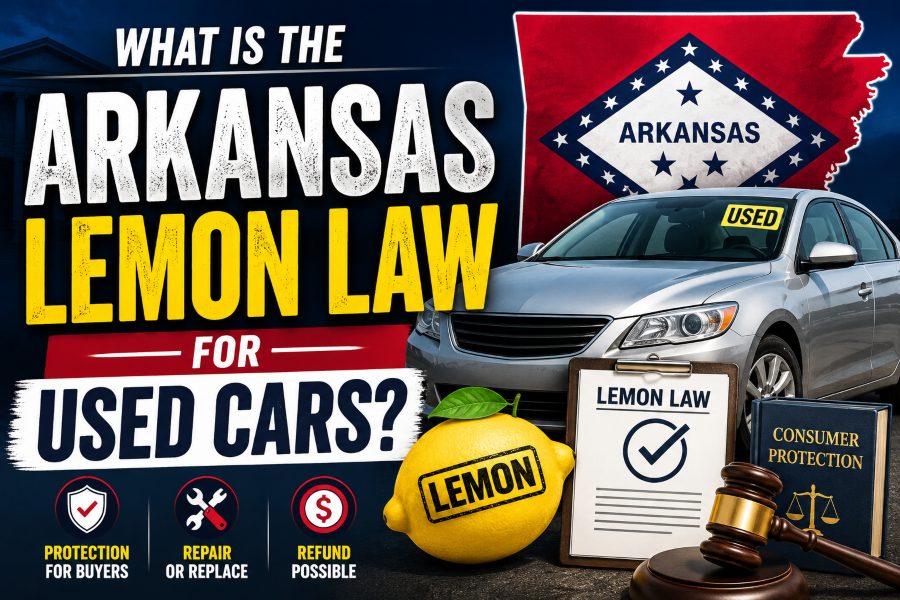
What is the lemon law for used cars in Arkansas? The answer depends on the vehicle’s original delivery date, mileage, warranty status, and repair history. Many used-car buyers think lemon-law protection ends after the first owner, but Arkansas may still protect a later buyer if the vehicle is transferred during the covered period.
This guide explains when a used vehicle may qualify, what defects matter, and which records can protect your claim.
Used Cars Can Qualify Only In Limited Situations
Arkansas’s lemon law mainly protects new motor vehicles, but a used vehicle is not automatically excluded. A later buyer may still have rights if the car was transferred during the Motor Vehicle Quality Assurance Period and the buyer can enforce the manufacturer’s warranty. The real question is whether the protected time, mileage, and warranty rights are still active.
Some lemon-law issues stay limited to warranty relief, while others overlap with accident injuries when brakes, steering, airbags, or electrical systems create real danger. A driver dealing with crash-related harm may speak with a trusted injury lawyer in Conway because injury claims focus on medical losses, fault, and damages, not only refund or replacement. Keep those issues separate so warranty records do not get confused with an injury claim.
What Is The Lemon Law For Used Cars In Arkansas?
What is the lemon law for used cars in Arkansas? In plain terms, it may help when a covered vehicle has a serious defect that the manufacturer, its agent, or an authorized dealer cannot repair after enough attempts. The defect must substantially impair the vehicle’s use, market value, or safety, and it must be tied to warranty rights that still apply.
This is different from a general complaint about buyer’s remorse, normal wear, cosmetic flaws, or a repair that appears after every warranty has expired. Arkansas’s strongest lemon-law protection applies during the later of 24 months after the vehicle’s original delivery or the first 24,000 miles of operation. If your used car is outside that window, other claims may exist, but lemon-law relief becomes much harder.
The Quality Assurance Period Controls Coverage
The Motor Vehicle Quality Assurance Period is the timing rule that decides whether a used vehicle can still fit within Arkansas lemon-law coverage. It runs until 24 months after the vehicle’s original delivery to the first consumer or until the first 24,000 miles of operation, whichever comes later. This rule can help when the vehicle is still newer, low-mileage, and under a manufacturer-backed warranty.
You should not measure the deadline only from the date you bought the used car unless you were the first consumer to receive it. Instead, find the original delivery date, compare it with the odometer, and identify when you first reported the defect for repair. If the defect was reported during the quality period, your claim is stronger than a late complaint.
What Defects Usually Matter Most?
A qualifying defect is often called a nonconformity because the vehicle does not conform to the warranty in a substantial way. The problem must affect use, safety, or market value, so Arkansas law focuses on serious defects instead of minor annoyances. Examples may include engine stalling, transmission failure, brake defects, steering problems, electrical shutdowns, damaging water intrusion, or safety-warning failures.
Small issues can still be irritating, but they may not support a lemon-law claim unless they create a substantial impairment. A loose trim piece or radio problem may belong in a warranty complaint, but it is weaker than an unsafe or unreliable vehicle. Your strongest proof comes from repair orders showing the same problem, repeated symptoms, or related failures that were never truly fixed.
Used Cars Sold As Is Need Extra Caution
Many Arkansas used-car disputes become harder when paperwork says “as is.” That wording usually means the seller is trying to shift repair risk to you, especially when no manufacturer warranty or dealer warranty remains. It can make a lemon-law claim difficult if the vehicle is outside the protected period and no enforceable warranty covers the problem.
Still, “as is” does not always erase every possible legal issue. Fraud, odometer tampering, title problems, hidden flood damage, deceptive statements, or written promises may create separate concerns outside the lemon-law framework. Read the buyer’s guide, contract, warranty booklet, certified pre-owned papers, service contract, and dealer promises before assuming you have no options.
How Many Repair Attempts Are Enough?
Arkansas uses repair-attempt rules to decide when the manufacturer has had a reasonable opportunity to fix the defect. A claim may become stronger after three failed attempts for the same substantial problem, or after one failed attempt for a dangerous defect, followed by the final repair opportunity. A vehicle may also qualify after 30 or more calendar days out of service for repairs.
You should treat every repair visit as evidence. Ask for a written repair order each time, confirm the symptoms are accurate, and keep copies showing dates, mileage, parts, labor, and findings. Vague paperwork such as “could not duplicate” can hurt you if it does not reflect what you clearly reported.
The Final Repair Notice Is Critical
Before demanding a refund or replacement, you often must give the manufacturer a final chance to repair. This usually requires written notice by certified or registered mail after the repair threshold has been reached. The notice should go to the manufacturer, not only the dealer, because the manufacturer receives the final statutory opportunity.
After proper notice, the manufacturer has a short period to offer repair at a reasonably accessible facility. Once you deliver the vehicle to that facility, the final repair must be completed within the required time. If the manufacturer ignores the notice or fails to act on time, your position may improve because the final-repair requirement may no longer block your claim.
What Refund Or Replacement Can Include
If a covered vehicle qualifies and the manufacturer cannot fix it after the required opportunities, Arkansas law may require a refund or replacement. A refund may include the purchase price or lease price, collateral charges, and reasonably incurred incidental charges. These charges may include title fees, registration, taxes, towing, rentals, and costs tied to the defect and repair process.
The manufacturer can usually subtract a reasonable use offset based on the miles driven before the vehicle was first presented for repair of the problem that supports the claim. Arkansas uses a formula that compares the vehicle price and qualifying mileage against a 120,000-mile denominator. That is why you should report serious defects quickly instead of hoping the problem disappears.
What Records Should You Save?
Your records can decide whether your used-car claim looks organized or uncertain. Save the purchase contract, warranty booklet, buyer’s guide, financing papers, title documents, odometer statement, repair orders, towing receipts, rental invoices, emails, texts, and certified-mail records. Keep everything in one folder so you can show a clean timeline.
You should also write down what happened before each repair visit. Note the date, mileage, warning lights, driving conditions, sounds, smells, power loss, braking symptoms, or safety concerns. A short timeline helps when a dealer claims the vehicle has unrelated problems.
What If The Dealer Says It Is Not Covered?
A dealer may say the problem is normal, caused by wear and tear, outside warranty coverage, or impossible to duplicate. Sometimes that answer is correct, but it may be incomplete if the manufacturer still has warranty or lemon-law duties. Compare the dealer’s explanation with your warranty terms, the timing of your complaint, and the number of repair attempts.
Do not rely only on phone calls when the issue is serious. Ask for written findings, diagnostic notes, repair history, parts orders, and any technical explanation used to deny coverage. If the explanation changes, that inconsistency may show the defect was never resolved.
When Federal Warranty Law May Help
If your used car falls outside Arkansas lemon-law coverage, federal warranty law may still matter when a written warranty applies. The Magnuson-Moss Warranty Act does not turn every used vehicle into a lemon, but it may help when written warranty promises are ignored. This can matter when the vehicle has remaining manufacturer coverage or a written dealer warranty.
You should not treat federal warranty law as an automatic substitute for Arkansas lemon-law protection. The remedies, proof requirements, and strategy can differ, and your purchase documents will matter. Still, it can help when the warranty covers the defect and repair is refused.
Steps To Take If You Think You Bought A Lemon
Start by confirming the original delivery date, current mileage, warranty status, and first date you reported the defect. Then gather every repair order and mark each visit involving the same problem, a safety defect, or days out of service. This gives you a working timeline before notice or dispute resolution.
Next, use the manufacturer’s customer assistance process listed in the warranty booklet. Keep your message factual and focus on dates, repair attempts, mileage, and the defect’s effect on use, value, or safety. If the repair threshold is reached, send final notice by certified or registered mail and keep a copy.
How To Protect Yourself Before Buying Used
The best protection starts before purchase. Ask for the in-service date, original delivery date, remaining warranty, title status, open recalls, service records, and vehicle-history report. A cheap car can become expensive if it is outside lemon-law timing and has no meaningful warranty left.
You should also get an independent inspection whenever possible. A mechanic may spot crash repairs, leaks, code history, flood signs, tire wear, or drivetrain concerns that a test drive may miss. If the seller refuses inspection, avoids written answers, or rushes you, treat it as a warning sign.
Conclusion
What is the lemon law for used cars in Arkansas? It is a limited but valuable protection that may apply when a used vehicle is transferred during the Motor Vehicle Quality Assurance Period and still carries enforceable warranty rights. You are not protected simply because the vehicle is used, defective, or expensive to repair, so timing and documentation are critical.
Focus on the original delivery date, the first 24,000 miles, the remaining warranty, the seriousness of the defect, and the repair history. If the same substantial problem continues after repeated repair attempts, or a serious safety issue remains unresolved, certified notice and a final repair opportunity may be required. The stronger your records are, the easier it becomes to show whether your used vehicle still qualifies for Arkansas lemon-law relief and fair manufacturer accountability under the facts of your case.